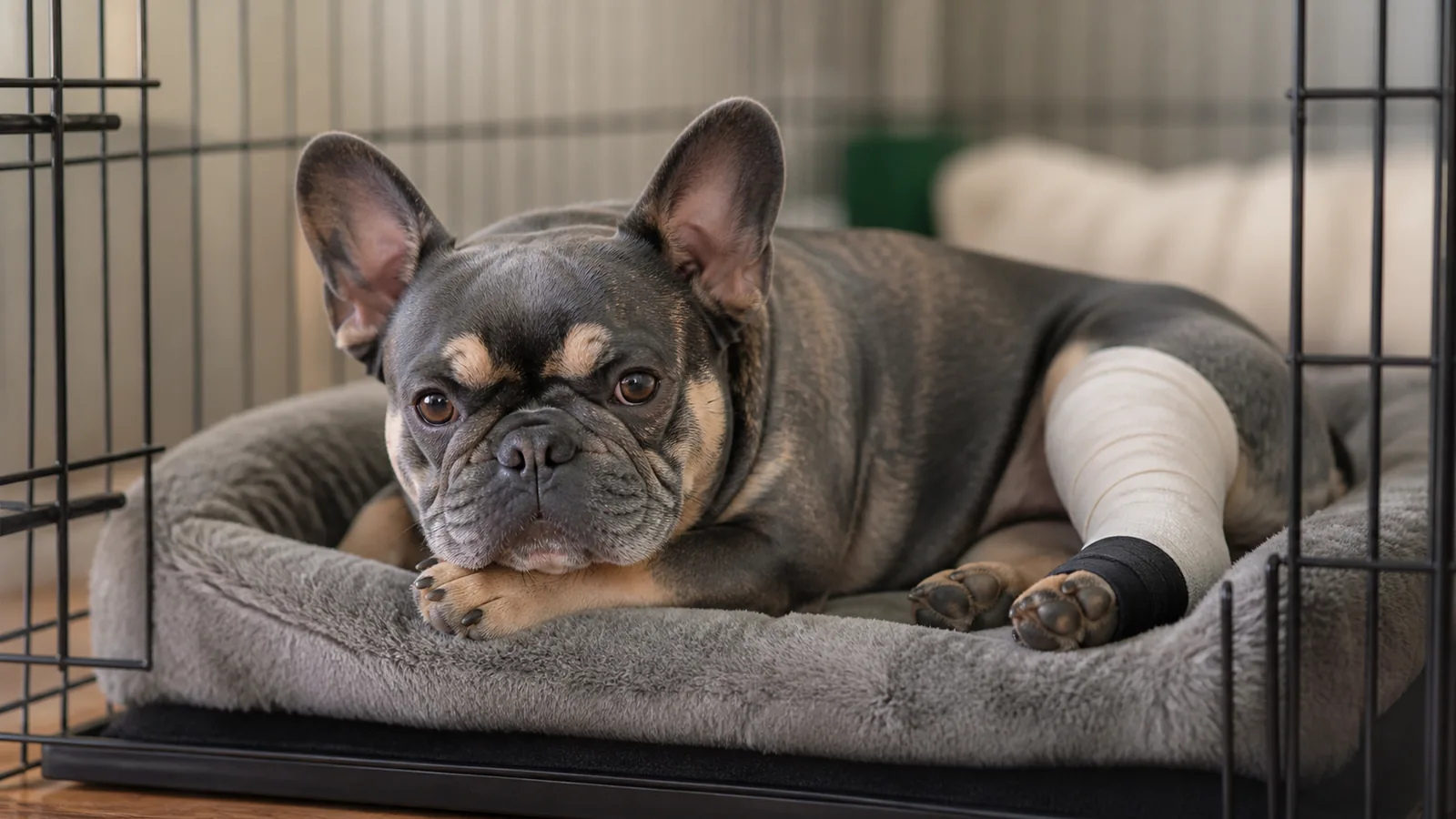
Rest and pain medication are the foundation of post-op recovery, but they are not the whole plan. Healing follows a sequence: anesthesia clears, inflammation peaks over the first few days, tissue rebuilds, and strength comes back last. Therapies like acupuncture and laser can lower pain and calm swelling around the incision, easing the hardest stretch of healing, though the activity restrictions set after the procedure still run their full course no matter how comfortable your pet gets. Much of a good outcome is decided at home, where knowing which quiet, low-appetite days are normal and what signs need a call keeps a small problem from turning into a real setback.
MountainView Veterinary Hospital in Denville performs both planned and emergency surgery, so the doctors guiding your pet's recovery are the same ones who were there for the procedure. We pair conventional post-op care with integrative therapies like acupuncture, laser, and pulsed electromagnetic field therapy (PEMF), which can ease discomfort and support healing tissue without adding another drug. Every recovery plan is built around the procedure your pet had, their age, and how they are actually doing at each recheck, and our Cat Friendly practice certification keeps feline rechecks low-stress. If surgery is coming up, or you are partway through recovery and something does not seem right, call us so we can take a look.
Start Here: The First Two Weeks After Surgery
- Sleeping more and eating less for the first day or two is the normal shape of recovery, not a sign that something has gone wrong.
- The signs that need a call are changes: an incision that opens or drains, repeated vomiting, pale gums, shifting breathing, or pain that climbs instead of easing.
- Days five through ten are the riskiest stretch, because that's when pets feel well enough to undo a repair that's still fragile.
- Acupuncture, therapeutic laser, and PEMF lower pain and swelling alongside the medications, and rehabilitation exercise rebuilds the muscle that surgery and cage rest take away.
What Happens Inside Your Pet in the First Days After Surgery?
Anesthesia leaves most pets wobbly and poorly coordinated for the first several hours, so recovery starts in a small, quiet, non-slip space where stairs, jumping, and other pets are off the table. Swelling builds over the next two to three days, then fades as the incision seals. That inflammatory wave isn't a complication. It's the body flooding the site with the cells that clean up and rebuild, and it's why day two often looks worse than day one.
| Stage | What's happening inside | What you'll see at home |
| Hours 0 to 12 | Anesthesia clearing, first pain medications on board | Grogginess, unsteady walking, whining or disorientation |
| Days 1 to 3 | Swelling peaks, the incision seals over | Sleepiness, less interest in food, mild bruising |
| Days 3 to 10 | New tissue bridges the wound and is still fragile | More energy than the repair can safely handle |
| Weeks 2 to 6 | Tissue strengthens, muscle rebuilds | A staged return to normal life |
How quickly your pet moves through that sequence depends on the procedure, their age, their body condition, and anything they were already managing. A kitten home from a spay is usually back to mischief within days. A ten-year-old Labrador after a cruciate repair works on a scale of weeks to months. Blood work run before anesthesia tells us how well the kidneys and liver will clear the drugs, and our in-house diagnostics let us recheck those numbers as recovery goes on.
How Do You Tell a Normal Recovery Day From a Real Problem?
Most days after surgery are uneventful, and uneventful is exactly what we want. What separates a normal day from a real problem is change: a pet who was steadily improving and then isn't.
What do the first couple of days at home usually look like?
The first days at home after surgery are dull by design: a quiet demeanor, a lighter appetite, and more sleeping than usual across the first 24 to 48 hours. Set the recovery space up before you bring your pet home, dim and warm and away from the doorbell. No bowel movement for a couple days is common after anesthesia and pain medication, though a pet who hasn't urinated in 24 hours needs to be seen.
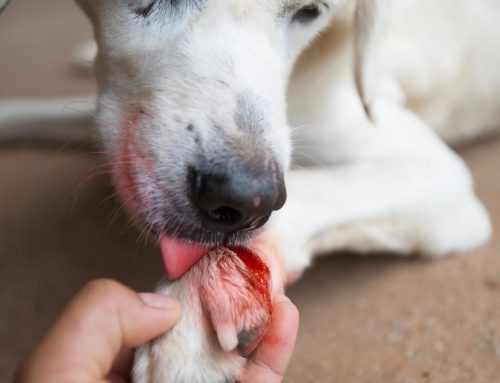
The cone is the part families fight hardest, and it prevents more repeat visits than anything else in the discharge bag. Ten seconds of determined licking can undo a closure. Keep it on overnight too, until we clear it. Alarms on your phone help with the medication schedule, since staying ahead of pain works far better than chasing it, and the antibiotic and anti-inflammatory both need every dose through the end of the course.
A few well-meant moves make things worse. Never give human pain medication: ibuprofen, naproxen, and acetaminophen are toxic to dogs and cats at doses that seem tiny, and acetaminophen can kill a cat. Never add a second anti-inflammatory or a leftover pill from another pet on top of what we sent home. Skip ointments, alcohol, and hydrogen peroxide on the incision, which irritate the tissue trying to close, and no baths until the sutures come out.
Which post-op signs mean picking up the phone right now?
Bleeding that soaks through a bandage, an incision that pulls open, repeated vomiting, collapse, or pale gums sit on the short list of veterinary emergencies that call for a phone call instead of a wait-and-see night. Add a pet who refuses all food past 24 hours, one you can't rouse, swelling that grows rather than shrinks, or any trouble breathing.
We handle emergency and urgent care during our open hours, and walk-ins are welcome, so if something looks wrong at two in the afternoon, come in. If we're already closed, go straight to the nearest veterinary emergency hospital.
How Do You Know Whether Your Pet's Pain Is Controlled?
Post-surgical pain rarely sounds like crying. The common signs of pain are quieter: hiding, panting, restlessness, a hunched posture, and steady licking at the incision, all of which families often read as ordinary tiredness. Comfort looks like a pet who settles, sleeps curled, and eats. Sometimes the anesthesia wearing off can make a pet whine or act uncomfortable, and can be easy to mistake for pain. We typically give a longer-acting pain medication when your pet goes home, so wait to give any medications until we say so.
Good pain control stacks several approaches rather than leaning on one drug. An anti-inflammatory calms swelling at the source, gabapentin quiets nerve pain and takes the edge off anxiety, and local blocks placed during the procedure carry relief into the first day.
Cats hold their pain in their faces, and the grimace scale turns ear position, squinting, muzzle tension, whisker angle, and head carriage into a score you can check at home twice a day. Dogs give it away in movement instead: a slow lowering into a sit, a stiff rise off the floor, weight shifted off one leg. Jot down what you see and when you see it, because discomfort that reliably returns every evening usually means the timing needs a change rather than the drug. Our veterinarians would much rather hear from you, rather than you waiting and worrying.
How Do You Keep a Bouncy Pet Still for Two Weeks?
Restricted activity is what protects the repair, and it works best when the setup is one you can maintain without a nightly argument. One hard landing can pull an incision open or loosen an orthopedic implant, and puppies and kittens are the hardest cases of all.
- A crate: works beautifully for dogs who already sleep in one, since the familiarity does half the job.
- A single small room: a bathroom, laundry room, or spare bedroom suits cats and crate-averse dogs.
- Baby gates: keep stairs and slick hallways out of reach without shutting a social pet behind a door.
- Traction: yoga mats or runners over hardwood give back legs something to grip.
Confinement rest goes far more smoothly when food, water, and a low-sided litter box all sit within a few steps of the bed, so your pet never has to choose between comfort and staying put. Boredom is the hardest part for most pets, and homemade enrichment toys built from a paper bag, a cardboard tube, or a towel-wrapped treat give the brain a job while the body stays still. Snuffle mats, lick mats, and two-minute training games spend energy without bothering the incision.
Some pets truly can't settle, and white-knuckling it for two weeks isn't the answer. Reach out if your dog is vocalizing through the night or your cat is scaling the pen, because a calming supplement or a short course of anti-anxiety medication protects a repair better than willpower does.
What If Your Pet Won't Eat After Surgery?
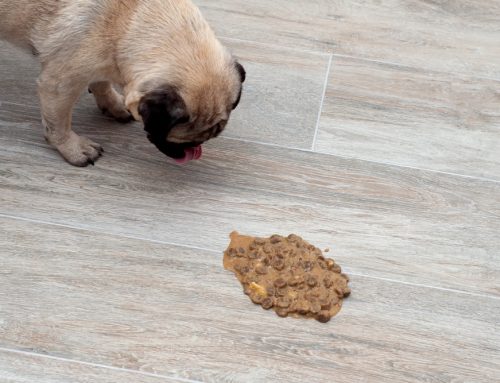
A pet who turns down dinner usually comes back around within a day, and small portions every few hours, food warmed to just below body temperature, and a few bites offered by hand move things along. Anesthesia and pain medication both blunt appetite.
Eating isn't optional during healing. Protein supplies the raw material for new tissue and keeps the immune system running, and a pet who skips meals loses muscle at a surprising pace. Boiled chicken and rice tempts a queasy stomach, and a strong-smelling canned food often wins where kibble fails. Raise the bowl or supervise a few cone-free minutes at mealtime, because a plastic cone in a shallow dish defeats plenty of hungry pets. Just make sure the cone goes back on promptly anytime your eyes aren’t directly on your pet; it only takes seconds to pull out stitches.
Anything past 24 hours with no food deserves a call, and in cats that line is firm: a cat who stops eating can slide into a serious liver condition called hepatic lipidosis within days. Ongoing vomiting, or a pet growing more lethargic instead of less, points to something beyond a picky mood. We can look for nausea, pain, or infection behind it and talk through appetite stimulants and food suited to a healing body.
When Is Breathing Trouble After Surgery an Emergency?
Open-mouth breathing in a cat, blue or gray gums, a neck stretched forward, and any sudden change in breathing rhythm all point to respiratory distress, which is never something to sleep on. Trouble breathing after anesthesia is urgent no matter how smoothly the rest of the day went.
The risk runs highest after chest or upper airway procedures, and after any anesthesia in flat-faced breeds like the Pug and the Bulldog, whose airways swell easily once the breathing tube comes out. Watch for a resting breath rate that climbs, effort that pulls at the belly, agitation that won't settle, or a cat who props their elbows wide and refuses to lie down.
Come in the moment breathing looks off. Once we close, a live video visit puts you with a veterinarian who can tell you whether to drive to the nearest emergency hospital, which beats guessing at midnight.
Which Therapies Do More Than Rest and Medication?
Rest and medication control pain and protect the repair, but neither rebuilds anything. Rehabilitation, laser, acupuncture, and pulsed electromagnetic field therapy work on the tissue itself, calming swelling, moving blood into the surgical site, and getting muscle back.
How does rehabilitation rebuild what surgery takes away?
Veterinary physical rehabilitation uses therapeutic exercise, hydrotherapy, manual therapy, and targeted stretching to rebuild the muscle that surgery and cage rest take away, and to break the limping pattern that turns one healing leg into two sore ones. Formal programs built around an underwater treadmill run at rehabilitation-certified hospitals, and we refer for those and stay involved in the plan.
Plenty of the early work happens on your living room floor: gentle range-of-motion on the affected limb, weight-shifting drills, and short controlled leash walks that lengthen on a schedule we set at each visit. We also offer PEMF therapy, which sends a pulsed magnetic field through healing tissue to reduce swelling and support bone and soft tissue repair while your pet lies in their own bed.
What does laser therapy do for a healing incision?
Laser therapy sends light energy into healing tissue to calm inflammation, improve circulation, and speed cellular repair, and most pets settle in for the few minutes a session takes without sedation or restraint. It suits incisions, orthopedic repairs, soft tissue injuries, and sore joints that flare during restricted activity. Class IV laser sessions usually cluster close together early on, then spread out as your pet improves, because the benefit builds across treatments instead of arriving all at once.
Is acupuncture worth adding after surgery?
Veterinary acupuncture places very thin needles at specific points to change how pain signals travel, release the body's own pain-relieving chemicals, and push more blood flow toward tissue that's trying to rebuild. It earns its place with senior patients carrying arthritis on top of a fresh procedure, pets whose kidneys or stomachs limit how much anti-inflammatory they can take, and pets whose discomfort hasn't fully answered to medication. The needles are roughly the width of a whisker, most pets barely register the placement, and a fair number fall asleep on the mat. Acupuncture appointments fold in alongside the rest of the plan rather than replacing any part of it.
How Do We Build the Plan Around Your Pet?
Every recovery plan starts with the procedure your pet had, then bends around their age, temperament, other conditions, and how they look in front of us at each visit. A young cat home from a spay needs very little. A senior dog with a fracture repair and existing arthritis needs layers, and closer follow-up.
| Procedure | Typical restriction window | Where integrative care often fits |
| Spay or neuter | Usually about 10 to 14 days | Rarely needed; laser if the incision is slow to close |
| Dental extractions | Soft food for roughly two weeks | Laser to settle gum inflammation, acupuncture for pets limited on pain medication |
| Orthopedic repair | Six weeks or longer, in stages | Rehabilitation exercise, laser, PEMF, and acupuncture, often together |
| Abdominal surgery | Usually about two weeks | Acupuncture for nausea and pain, laser once the incision is sealed |
Your discharge instructions set the real numbers for your pet. Rechecks are where the plan moves: we look at the incision, remove sutures when the tissue is ready, clear more activity, taper or extend medication, and add or space out therapy sessions. Here in Denville, we'd rather adjust a plan three times than guess at it once, so if you're unsure whether something counts as a setback, tell us anyway. A swelling that turns out to be nothing makes for a much better phone call than one we hear about a week late.
What Families Ask Us in the Two Weeks After Surgery
When can my dog use the stairs again?
Stairs come back gradually, and the timeline follows the surgery. After a routine spay or neuter, most dogs manage a few controlled steps on a leash within the first week, as long as nobody is launching up or bounding down. After a cruciate repair or a fracture, stairs usually wait several weeks and return one flight at a time with a towel sling or a harness for support. Ask at the recheck, because reinjury tends to happen on the exact day a pet finally feels good.
Does the cone really need to stay on the whole time?
The cone stays on until the incision is fully healed, which usually lines up with suture removal. Pets lick when nobody is watching, especially overnight, and very little licking is needed to open a closure or seed an infection. If the standard plastic cone is making everyone miserable, ask us about a soft cone, an inflatable collar, or a recovery suit. The right choice is whichever one your pet can't get around.
Is bruising or a firm lump near the incision normal?
Some bruising is expected, particularly on pale-skinned bellies, and it often looks worse on day three before fading to yellow-green. A soft, fluid-filled swelling under the closure may be a seroma, which forms after too much activity and usually resolves on its own. What isn't routine: heat, a firm swelling that keeps growing, redness spreading outward, discharge that isn't clear, or a pet who flinches when you come near. Those need a look from us rather than another day of watching.
Getting Your Pet Back to Themselves After Surgery
Recovery asks a lot of a household: the cone battles, the crate rest, the two in the morning worry about whether that swelling means something. Most of it goes well, and the parts that don't tend to announce themselves early to someone who knows what to watch for.
Whether surgery is still on the calendar or you're already halfway through the healing window, book a follow-up visit with MountainView Veterinary Hospital in Denville and we'll map out the next stretch together.