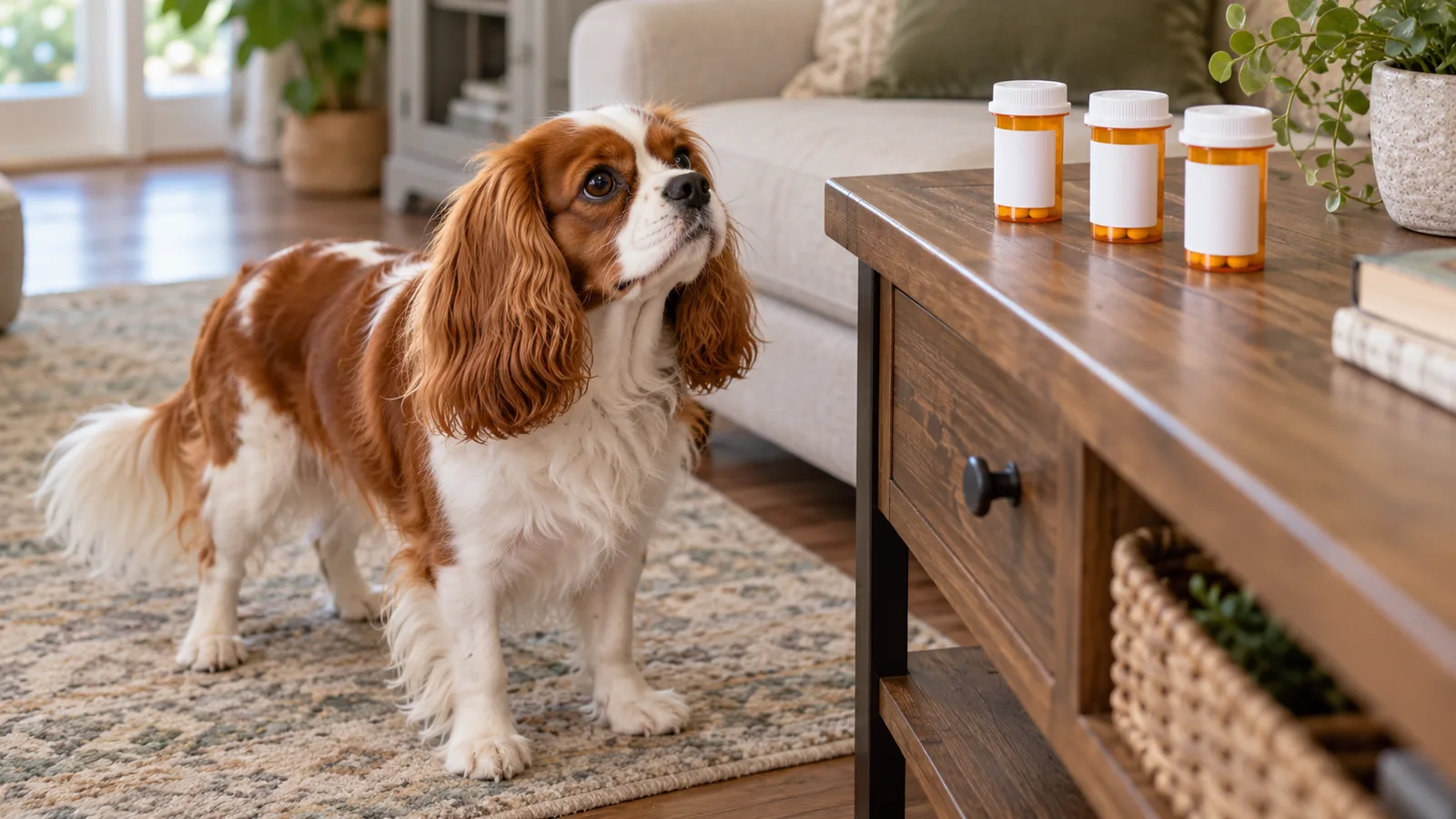
The moment a murmur turns up at your pet's exam, the next step is almost always a closer look rather than a prescription, because the sound by itself cannot tell anyone if a heart needs treating. A murmur is the noise of turbulent blood flow picked up through a stethoscope, and it does not identify the condition causing it or how advanced that disease has become. Imaging and bloodwork are what separate the dogs and cats who live comfortably with one for years from those whose valve or muscle change has reached the stage where medication adds real time to their life. For dogs that usually means pimobendan, a diuretic, or an ACE inhibitor; cats with heart muscle disease need a different combination, often including a drug to prevent dangerous clots.
Hearing that your pet has a murmur is worrying, and that's why a long-term relationship with a hospital that offers cardiac care and 24/7 virtual guidance matters. At MountainView Veterinary Hospital in Denville, we care for dogs and cats from across Morris County, including Rockaway, Boonton, Mountain Lakes, and Parsippany, and we can show you what sits behind the sound with ultrasound and digital X-rays that measure how the heart is working and how far any change has progressed. When you're worried about your pet's symptoms, we take walk-ins during our regular hours and have 24/7 virtual triage available. If a murmur has been heard in your dog or cat, ask us what it means for your pet.
Heart Medication Basics for Dogs and Cats
- A murmur is a sound, not a diagnosis: imaging tells us whether the heart making it needs treatment.
- Small dogs most often develop a leaky valve, cats more often a thickened heart muscle, and the two get different prescriptions.
- Each cardiac drug does one job, so a pet in heart failure usually takes three or four together.
- The breathing rate you count while your pet sleeps tells us more at a recheck than almost anything else you could write down.
What Tells Us a Heart Needs Treating and Not Just Watching?
We decide by measuring the heart, not by how loud the murmur sounds. A soft murmur can sit on top of a seriously enlarged heart, and a loud one can belong to a heart that measures normal. Imaging tells us whether the chambers have stretched and whether fluid has started to collect, and that sets the start date for medication.
- Chest X-rays: show whether the heart has grown past its normal footprint and whether the lungs have begun to hold fluid.
- An echocardiogram: this ultrasound of the heart measures wall thickness and chamber size, and separates a leaking valve from a stretched muscle.
- An ECG: records the heart's electrical activity rather than its structure, which is how an abnormal rhythm gets identified.
- Holter monitoring: sends a pet home in a wearable ECG that records every beat for a full 24 hours, because arrhythmias come and go and a few minutes in an exam room can miss them.
Murmurs often turn up at a routine exam in a pet who seems fine, and not every one means disease, but every one deserves imaging before it gets dismissed. Twice-yearly wellness exams once a pet is a senior are where many murmurs get caught, and screening bloodwork belongs in that visit: an overactive thyroid in a cat, or kidney disease in either species, makes a heart work harder, and treating what sits underneath can do more than adding a cardiac drug.
Why Does One Heart Need Three or Four Medications?
A failing heart goes wrong in several ways at the same time. Most heart disease medications handle one piece of the problem and not the rest, so a pet in heart failure usually ends up on three or four of them covering pumping strength, fluid overload, blood pressure, and the hormone signals that keep making all three worse.
The mix changes over time. At each recheck we weigh the breath counts you've logged, fresh X-rays, and kidney values, then adjust a dose or add one drug rather than starting over.
Why Does Pimobendan Usually Come First?
Pimobendan works on both ends of the problem: it helps the heart muscle squeeze harder with each beat, and it relaxes the vessels the heart is pumping into, so each beat moves more blood with less effort. Many dogs act more like themselves soon after starting it. In a large study of dogs with mitral valve disease whose hearts already measured enlarged on X-rays, starting pimobendan before symptoms appear delayed the onset of heart failure by roughly 15 months, so we sometimes prescribe it for a dog who still seems fine at home.
What Happens When a Pet Starts a Diuretic?
Furosemide makes the kidneys pull extra water out of the body, which drains the fluid backed up in the lungs. The first change most families see is thirst, more trips outside, and a heavier litterbox, which is the drug doing its job, so never limit water for a pet on a diuretic. Spironolactone works alongside it in two ways: it holds on to the potassium furosemide wastes, and it blocks one of the hormones that scars heart muscle over time. Both work through the kidneys, so we repeat bloodwork that checks kidney values and electrolytes after a dose change and periodically after that. A pet on a diuretic who stops eating or drinking needs to be seen rather than watched, since dehydration pushes those values up quickly.
What Does an ACE Inhibitor Change?
Enalapril and benazepril, the two ACE inhibitors we reach for most, block a hormone cascade the body switches on when it senses the heart falling behind. That cascade holds on to salt and water and tightens blood vessels, which helps after a hemorrhage and hurts in heart failure. Blunting it also lowers blood pressure, so an ACE inhibitor does double duty when high blood pressure shows up alongside heart disease, which is common in cats with kidney or thyroid disease. It isn't enough on its own, so it's used alongside pimobendan and a diuretic rather than in place of them.
What Do Beta-Blockers Do for the Heart?
Beta-blockers such as atenolol and sotalol slow a racing heart and steady beats that fire out of order, which makes them rhythm drugs more than pumping drugs. Cats with thickened heart muscle and dogs with certain arrhythmias tend to benefit most. We start low and raise the dose slowly, because slowing a heart that's already weak can leave it pumping too little, and these drugs are usually held back while fluid is still building in the lungs.
What Medication Do Cats Need That Dogs Don't?
Cats with thickened heart muscle frequently carry one prescription dogs don't. Clopidogrel blunts the blood's clotting response, because an enlarged feline heart can form a clot that travels and wedges where the vessels to the back legs divide. It's preventive, which is why a cat with no symptoms at all may still go home with a daily pill.
Which Heart Diseases Lead to These Prescriptions?
Dogs and cats tend toward different heart problems, and which one your pet has decides what goes on the prescription list. A murmur heard at a first puppy or kitten exam points more often to a defect they were born with than to a worn valve.
| Condition | What goes wrong | Who tends to get it |
| Mitral valve disease | A valve thickens and lets a little blood leak backward with every beat | Most acquired heart disease in dogs, and small breeds above all: Cavalier King Charles Spaniels, Dachshunds, and Chihuahuas |
| Dilated cardiomyopathy | The muscle walls stretch thin, the chambers enlarge, and the heart loses pumping strength | Dobermans, Great Danes, Boxers, and Irish Wolfhounds, and now rarely cats since taurine was added to commercial cat food |
| Hypertrophic cardiomyopathy | The wall of the left ventricle thickens until the chamber holds less blood with each beat | The most common heart disease in cats |
| Restrictive cardiomyopathy | Stiffened muscle can't relax enough to fill | Less common, in cats |
| Arrhythmias, meaning irregular rhythms | Beats fire too fast, too slow, or out of order, and the heart's own pacemaker can pause long enough to make a dog wobble or faint | Either species, on their own or alongside another heart problem, and Miniature Schnauzers get sick sinus syndrome while Boxers are prone to an electrical fault that fires off fast, chaotic beats |
| Defects present from birth | A patent ductus arteriosus is a blood vessel every puppy has before birth that should close soon after, and when it stays open it makes a loud murmur | Puppies, especially Poodles and Collies, and kittens born with a hole between the chambers |
Many cats with heart disease never have a heart murmur at all, and what a family notices first is fast breathing or sudden back-leg weakness. As a Feline Friendly practice, we keep a nervous cat as calm as possible through an echocardiogram, which also makes the measurements more accurate.
Heartworm disease belongs on this list in northern New Jersey too. Mosquitoes spread it every summer from the Rockaway River to the lakes around Denville, and the worms live in the heart and the vessels of the lungs, straining the right side of the heart. That's why a heartworm test is part of a murmur workup here, and why year-round prevention matters for both dogs and cats.
How Would I Know at Home That My Pet's Heart Is Struggling?
The earliest heart disease signs are easy to write off as aging: a cough that lingers, tiring sooner on the same walk, faster breathing during sleep, or pacing and resettling at night.
Dogs and cats show these signs differently. A dog with a leaking valve often coughs at night and starts hanging back on a route they used to lead. Cats seldom cough. What gets noticed instead is a cat who stopped jumping to the top of the cat tree, or one breathing 50 times a minute asleep on the couch. Not every cough comes from the heart, since airway inflammation and a collapsing windpipe sound similar, so mention the small changes at an exam and let the workup sort out the cause.
When Is a Heart Problem an Emergency?
A cat breathing with their mouth open, gums that look pale or bluish, or a belly that heaves with every breath all point to respiratory distress, and that is a same-day problem. So is a sleeping breath count over 40 that keeps climbing, a collapse or fainting spell, and sudden weakness in a cat's back legs, which can mean a clot has lodged where the vessels to the hind limbs divide. We see urgent cases in Denville during our open hours, and after we close, the 24/7 live video chat with a veterinarian can tell you whether what you're seeing can wait until morning or needs one of the 24-hour emergency hospitals in northern New Jersey. Open-mouth breathing or a collapse means heading for an emergency hospital without waiting.
What Numbers Should I Write Down Between Rechecks?
The sleeping breath count is the number that matters most, because it starts climbing before a pet looks sick. Counting a sleeping pet's resting respiratory rate takes about 30 seconds, and one breath is one rise and fall of the chest. Count while your pet is asleep rather than dozing, and bring the numbers to every recheck.
| Breaths per minute, asleep | What it usually means | What to do |
| Under 30 | Fluid is staying where it belongs | Log it a few nights a week |
| 30 to 40 and creeping up over several days | Fluid may be starting to build | Call us before it climbs further |
| Over 40, or over 50 at any point | The lungs are likely holding fluid | Needs evaluation that day |
What Else Should I Write Down?
- Weekly weight: Same scale, same day. A pound creeping on in a dog or cat who isn't eating more is often fluid, and a slow slide down can mean the heart is burning through muscle.
- Appetite and energy: Note the day your pet turns down a meal they'd normally finish, or stops coming to the door to greet you.
- Coughing: Count episodes per day rather than describing them. "Four times yesterday, once all last month" tells us more than "sometimes."
What If My Pet Misses a Dose or Spits It Out?
Missing a single dose usually isn't an emergency. If you remember within a few hours, give it; if the next dose is nearly due, skip the missed one, and never double up to catch up. Never substitute a human heart or blood pressure medication, and never give a pet on cardiac drugs a human pain reliever such as ibuprofen. If your dog has figured out how to spit a tablet into the couch cushions, or your cat clamps down the second the bottle rattles, a compounding pharmacy can often turn the same drug into a flavored liquid, a medication that can be absorbed through the skin, a smaller tablet, or a chew. Reach out and we'll go over which of your pet's prescriptions can be reformulated.
Does Heart Disease Get Worse, and How Fast?
Heart disease moves in stages, and the pace varies a lot. Congestive heart failure is the point where the heart can no longer keep fluid moving forward and it backs up into the lungs or the abdomen, and reaching that stage means the medication plan changes, not that treatment stops.
| Where your pet is | What's happening | What treatment usually looks like |
| At-risk breed, no murmur | Nothing to hear yet | Listening at every exam |
| Murmur, normal-size heart | Turbulent flow, chambers still measure normal | Imaging now, rechecks to watch for change |
| Murmur with an enlarged heart | Chambers have stretched, no cough or breathing change yet | Pimobendan usually starts here |
| Heart failure | Fluid backing up into the lungs or belly | A diuretic joins the plan, often alongside two other drugs |
| Failure that stops responding | Standard doses no longer hold the fluid back | Doses raised, a second diuretic, closer rechecks |
Some dogs sit in the enlarged-heart stage for years on a single pill, and others move through it in months. Our veterinarians can tell you which stage your pet's imaging points to and what the next adjustment would likely be. Late in the course, the goal shifts toward comfort, appetite, and easy breathing, and those are conversations we have with you.
Cardiac Medication Questions Families Ask Us Most
Will my pet take these medications for the rest of their life?
Most dogs and cats take cardiac medication for life, because the drugs hold a damaged valve or a weakened muscle in check without repairing it, and stopping them lets the extra workload and the fluid return. Doses change over time, and not always upward. Never stop or cut a dose on your own, even if your dog or cat seems back to normal.
Can a low-salt diet replace any of the pills?
A lower-sodium diet supports the medications but doesn't stand in for them. The bigger win at home is cutting the salty extras: deli meat, jerky treats, cheese, and the crust off your pizza all add up fast for a 12-pound cat. Some pets do well on a prescription cardiac diet, and taurine or fish oil helps in specific conditions. Check with us before adding a supplement or starting herbal therapy, since some interact with cardiac drugs.
Is exercise still safe for a dog or cat on heart medication?
Moderate activity suits most pets with heart disease, so let your pet set the pace. A slow, flat loop around your neighborhood or along the water at Indian Lake is fine. The steep climb up the Tourne or the rocky trails at Pyramid Mountain, long hard runs, and exertion on a muggy Morris County afternoon in July are not. Stop if their breathing turns labored or they want to lie down.
Heart Murmur Care for Dogs and Cats in Denville
A murmur is a reason to look closer, not a reason to assume the worst, and many pets who need cardiac medication take it for years and keep doing what they like doing. If your pet has a murmur nobody has imaged yet, or a medication list due for another look, schedule a cardiac recheck at MountainView Veterinary Hospital on Route 46 in Denville. We'll tell you what the numbers show, what we'd change, and how we can help your pet keep enjoying life with you.