We love the joy and chaos a new kitten brings to a home, but those hilarious antics can turn into a vet visit faster than you’d think. Most kitten emergencies come from two directions: the hazards sitting around your home, and the infections and parasites a young immune system cannot fight off on its own. Both are largely preventable, which is why the vaccine and deworming series matters as much as a walk through the house looking for string, cords, and lilies. A two-pound kitten has very little reserve, so a swallowed thread or a dose of the wrong medication can turn serious within hours. Knowing the difference between a change that needs a same-day exam and one that means going in right away is what keeps a scare from turning into a crisis.
MountainView Veterinary Hospital in Denville is a certified Feline Friendly practice, and kitten wellness visits are where we build the vaccine and parasite protection that prevents much of this and get to know what normal looks like for yours. If something goes wrong while we are open, bring your kitten straight in as a walk-in. After we close, our clients can reach a veterinarian by live video through our 24/7 triage service, which tells you whether your kitten can be watched at home or needs to be seen that night. A kitten who is collapsed, bleeding, or struggling to breathe should go straight to the nearest 24-hour emergency hospital, and if you are not sure what you are looking at, give us a call.
What to Know Before Your Kitten Gets Into Trouble
- A kitten's reserves are tiny. Vomiting, diarrhea, or a skipped day of meals slides into dehydration and low blood sugar in under a day.
- Pale gums, labored breathing, straining in the box with nothing coming out, and a limp or cold kitten are go-now signs.
- Most kitten emergencies trace back to something in the house, like thread, cords, lilies, or medications, or to parasites that vaccines and deworming prevent.
- Never induce vomiting, pull on a swallowed string, or give human pain medication unless a veterinarian has told you to.
Why Do Kittens Go Downhill Faster Than Adult Cats?
A two-pound kitten carries almost no fluid reserve, no fat to burn, and a blood volume you could measure in tablespoons. Problems a grown cat would carry for days compound in hours. An immune system still learning its job gives infection a head start.
Kittens also hide trouble well. Sixteen hours of sleep a day is already normal, and a sick kitten gets small and quiet somewhere you don't usually look.
What Behavior Changes Mean a Kitten Needs to Be Seen?
The first signals are behavioral, and they're small. A kitten who quits mid-play, picks a hiding spot she's never used, or walks away from a full bowl is telling you something before any physical sign shows.
- Appetite: Kittens eat often and eagerly. Two refused meals in a row, or less nursing, is a real change.
- Energy and play: Naps between bursts of chaos are normal. Flat and unwilling to get up is not.
- Hiding and handling: A new hiding spot, flinching when picked up, or growling at a gentle touch usually means pain.
- Litter box: More trips, fewer trips, straining, accidents outside the box, or loose stool.
- Grooming and posture: A greasy coat or a hunched, tucked-up posture suggests nausea or belly pain.
Jot down when each change started and what she's eaten. A two-line timeline tells us more than a week of guessing. A frightened kitten masks all of this, and low-stress feline handling is built into every kitten exam here: quiet rooms, towels from home, minimal restraint.
Which Physical Symptoms in a Kitten Can't Wait Until Tomorrow?
A short list of physical signs moves a kitten from "keep an eye on her" to "bring her in." Repeated vomiting and diarrhea burns through reserves she doesn't have to spare, and paired with lethargy, a painful belly, or refusing to eat, the window is hours, not days.
Dehydration follows quickly. The skin-tent trick is unreliable this young. Check the gums: slick, wet, and pink rather than washed out. Tacky gums, cool paws, and a kitten who's hard to rouse point toward shock.
A kitten with any of these can walk straight into MountainView's emergency and urgent care during our open hours. After hours, the go-now column belongs at the nearest 24-hour emergency hospital.
| What you're seeing | Why it's high-risk at this size | How fast |
| Vomiting more than once or twice, or any vomiting with lethargy | Fluid loss outruns what she can drink back | Same day |
| Watery or bloody diarrhea | Dehydration, plus possible parasites or panleukopenia | Same day |
| No food for twelve hours or more | Blood sugar falls fast with no fat reserve | Same day |
| Pale, white, or gray gums | Anemia, bleeding, or shock | Go now |
| Open-mouth, noisy, or belly-heaving breathing | Kittens compensate quietly until they can't | Go now |
| Straining in the box with little or no urine | Pressure backs up toward the kidneys within a day | Go now |
| Cool to the touch, limp, or hard to wake | Hypothermia and shock feed each other | Go now |
| A seizure, a fall, or bleeding that won't stop | Internal injury can hide behind a normal look | Go now |
Which Household Hazards Actually Send Kittens to the Vet?
Two categories fill most urgent kitten visits: things kittens swallow, and places kittens get caught. Cleaning products, medications, lilies, thread, cords, recliners, doors, and dryers account for most of it, nearly always in a room where the kitten was supervised right up until she wasn't.
What Should You Do If Your Kitten Got Into Something Toxic?
Act on suspicion instead of waiting for proof, because the treatments that work best are given before a toxin is absorbed. ASPCA Animal Poison Control Center answers around the clock and can tell you whether what she swallowed is dangerous at two pounds.
Acetaminophen kills cats at doses that barely register in us, and ibuprofen and dog flea products are off-limits too. Essential oil diffusers, antifreeze, rodent bait, and cleaning solution on a freshly mopped floor round out the list. She walks through it and grooms her feet.
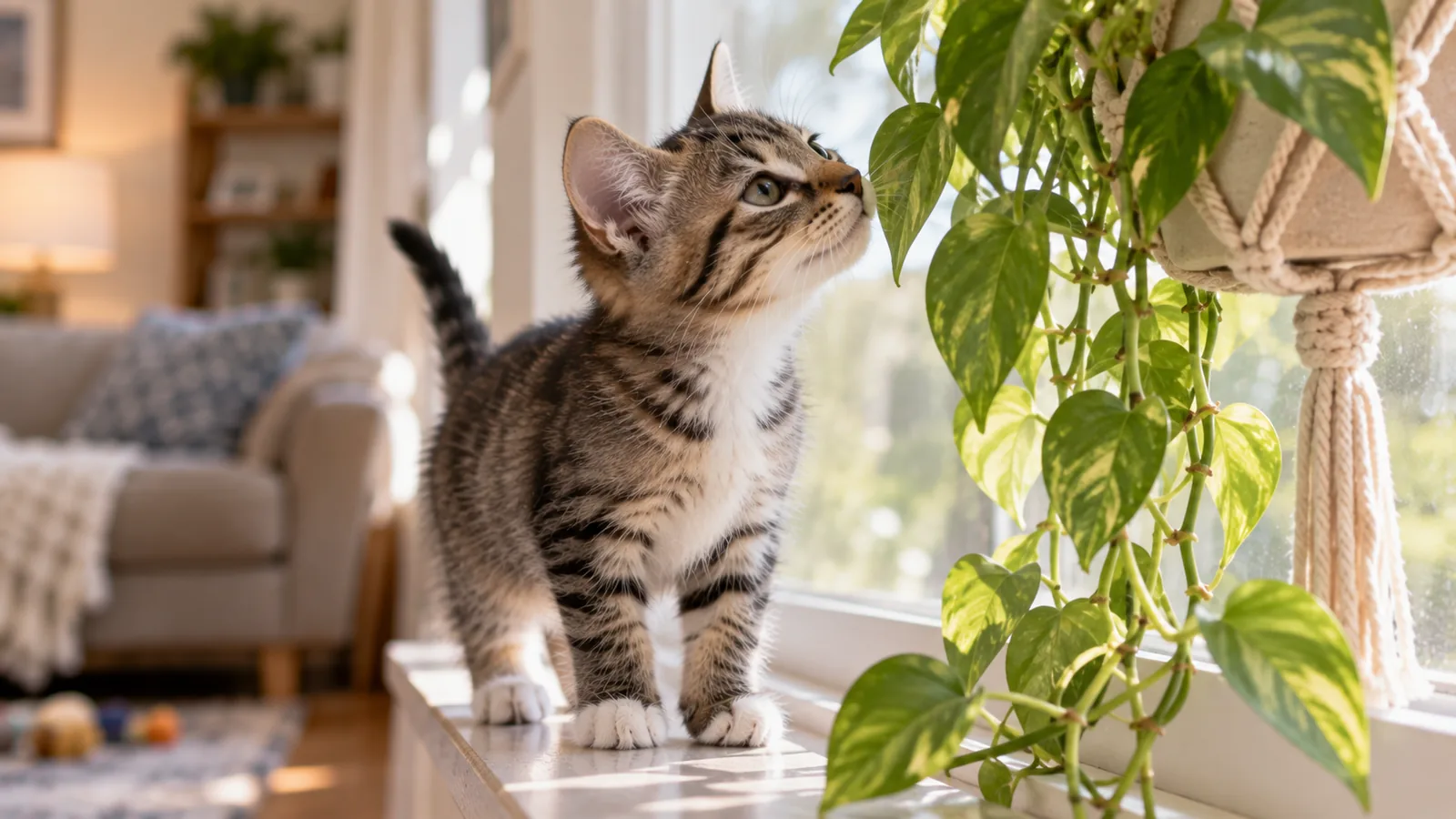
Lilies top the list of toxic plants for cats. Brushing past the pollen and grooming it off her coat is enough to put her kidneys at risk. Every part of the plant counts, including the water in the vase.
Do not make her vomit at home. Peroxide is caustic in cats, and some substances do more damage coming back up. Grab the container or a piece of the plant and call us right away.
How Do You Know If an Injury Hurts More Than It Looks?
A kitten who takes a bad landing and trots off can still have a bruised lung, a torn diaphragm, or a cracked pelvis, because small bodies hide that damage for hours. Fast shallow breathing, hiding, or refusing to bear weight afterward earns an exam.
A safe setup for a new kitten means secured window screens, a dryer door that stays shut, and a recliner nobody closes without looking. Chairs that roll or rock, closing a door without checking to see if the kitten is following, or tripping over an underfoot fluff ball can break a leg with less force than you’d think. Supervise any playtime with the dog, too. The crush injuries we see happen in the two seconds nobody was watching.
After any of that, schedule a post-trauma exam even when she seems fine. X-rays and a careful abdominal check find what she can't tell you.
Which Kitten Illnesses Turn Into Emergencies?
Four patterns account for most sick-kitten emergencies: gut trouble that dehydrates, a bladder that can't empty, parasites that drain blood, and respiratory infections that reach the lungs. None are exotic, and all of them move faster in a kitten than in a grown cat.
When Is Vomiting or Diarrhea in a Kitten an Emergency?
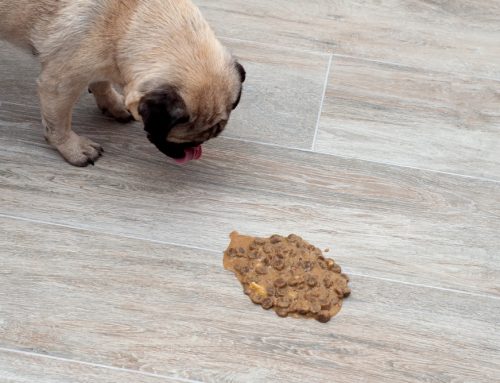
One soft stool after a food change is usually manageable at home. Watery or bloody stool, or diarrhea alongside vomiting, is not. A kitten can lose a real share of her body water in a day and can't drink fast enough to replace it.
The usual causes are an abrupt diet switch, cow's milk, the upheaval of a new home, and parasites like Giardia, coccidia, and roundworms. Panleukopenia belongs here too: vomiting, foul diarrhea, a kitten who won't get up. It spreads easily, and the FVRCP series prevents it.
String, tinsel, hair ties, and torn plastic bags are the usual culprits in foreign body ingestion. A linear object caught under the tongue can saw into intestine while she still looks bright and playful. If you spot thread at her mouth or under her tail, leave it and come in.
X-rays and ultrasound sort out what's in there, and the objects that won't pass need emergency surgery. The sooner that call is made, the less intestine is at stake.
Can a Kitten Get a Urinary Blockage?
Urinary obstruction is far more common in adult male cats, but kittens block too, from crystals, inflammation, or a defect in the urinary tract. The signs look the same at any age, and the clock runs faster in a smaller body.
Straining with little or nothing coming out is one of the few true emergencies where waiting until morning can be fatal, because a bladder that cannot empty backs pressure into the kidneys within a day.
Watch for repeated trips, crying in the box, licking under the tail, blood in the litter, or vomiting. Constipation looks nearly identical from across the room. Don't make that call at home. Never press on a straining kitten's belly, and never use a store-bought enema. The phosphate kind sold for people can kill a cat. After hours, a live video visit sorts it out quickly.
How Do Fleas and Worms Make a Kitten Anemic?
Blood loss is what makes parasites so dangerous this early. Roundworms and hookworms are the intestinal parasites most kittens pick up before they come home, through the placenta or the queen's milk, and hookworms feed fast enough to drain a two-pound body.
Pale or white gums, weakness, and a kitten who sleeps through mealtimes point toward anemia, which a heavy flea burden or hookworm infestation can drive from mild to life-threatening in days. A potbelly, dull coat, and poor growth often show alongside it.
A stool sample and a quick blood count tell us how far things have gone, and the fix is usually straightforward. One rule has no exceptions: never put a dog's flea product on a cat. The permethrin in many of them causes tremors and seizures and is often fatal.
When Is a Sneezing Kitten Something More?
Most kitten colds are viral, miserable for a few days, and manageable. Sneezing, crusted eyes, and a congested kitten who stops eating because she can't smell her food describe upper respiratory infections, which move fast through litters, shelters, and any home that just added a second cat.
Trouble starts when one reaches the lungs, when a herpesvirus ulcer eats into the cornea, or when a kitten skips enough meals to go hypoglycemic. Squinting, pawing at an eye, or a cloudy spot on the surface is a same-day problem.
Open-mouth breathing, blue or gray gums, a neck stretched forward, or fast shallow motion in the belly means go now, and handle her as little as possible on the way. Chest X-rays separate a head cold from pneumonia, and our in-house imaging and bloodwork fill in the rest.
What Should You Do in the First Ten Minutes of a Kitten Emergency?
Contain her, keep her warm, and get a veterinarian on the phone before trying anything else. A towel-lined carrier covers most of what pet first aid can accomplish at home. The rest belongs to a veterinarian with fluids, oxygen, and pain control on hand.
While we're open in Denville, a kitten emergency doesn't need an appointment. We triage on arrival. Have ready her age and rough weight, what she got into and how much, when, and where she stands on vaccines and dewormings.
| If this just happened | Do this | Don't do this |
| She swallowed a pill, a plant, or a cleaner | Bring the packaging and call on the way | Don't induce vomiting or give milk, salt, or peroxide |
| Thread is hanging from her mouth or rear | Leave it where it is and come in | Never pull it |
| She fell, was stepped on, or tangled with the dog | Carrier, towel, warmth, quiet | Don't give human pain medication |
| She's breathing hard or open-mouthed | Handle her minimally and go | Don't wrestle her into a carrier or drive with her loose |
| She's cold and limp | Wrap her in a warmed towel and go | No heating pad or hot bottle against bare skin |
| She's straining in the box | Be seen today | Don't press on her belly or use a store-bought enema |
How Do You Keep the Next Kitten Emergency From Happening?
Two habits do most of the work: a vaccine and parasite schedule that doesn't slip, and a house looked at from kitten height. Much of what becomes a midnight emergency is catchable months earlier at a routine exam, which is the quiet argument for preventive care on a schedule.
- The kitten visit schedule: Kittens start at six to eight weeks and come back every three to four weeks until roughly sixteen to twenty weeks, the cadence that lets kitten vaccinations and parasite prevention build real protection.
- Stool testing and deworming: Assume worms until a sample says otherwise, and keep a kitten-safe flea preventive going year-round, indoor-only cats included.
- Weight checks: A kitten who isn't gaining is telling us something, and a scale is the cheapest early warning there is.
- Carrier practice: Leave the carrier out with a blanket in it. Emergency trips get easier.
Pet-proofing for a kitten means thinking from three feet up to three inches off the floor: latched cabinets, clear counters, anchored cords, medications secure, locking trash lids. Block any holes, even ones that seem too small, because a tiny kitten can squeeze into what seems an impossibly small space around a pipe, behind a cabinet, or into an upholstered chair. Always supervise playtime with kids, dogs, and adult cats until they are big enough to fend for themself. Add the feline extras: no lilies in the house at all, hair ties, ribbon, and floss in a closed container, and a look before the recliner comes down.
What Kitten Families Ask Us About Emergencies
How Long Can a Kitten Go Without Eating Before It's a Problem?
A kitten runs out of time far sooner than a grown cat. Under four months there's almost no fat reserve, and twelve hours without food can drop her blood sugar far enough to cause wobbliness, cold ears and paws, or a glassy stare. Two refused meals in a row is a call, not a wait. A dab of corn syrup on the gums buys a little time on the way in, not a fix.
Is an Over-the-Counter Flea Product Safe for My Kitten?
An over-the-counter flea product is safe only if it's labeled for cats and for her age and weight, and even then it's worth a check with us. Dog products frequently contain permethrin, which causes tremors and seizures in cats. Most feline products carry a minimum age or weight. A very young kitten may need a warm bath and a flea comb while we treat the anemia the fleas caused.
My Kitten Seems Fine After Eating Something She Shouldn't Have. Do We Still Need to Come In?
You usually still need to come in, and sooner beats later. With most toxins and swallowed objects, the treatments that work best are given before symptoms start. A kitten who still looks normal is the easiest one to help, not proof that nothing happened. Thread under the tongue can be sawing into intestine while she bats a toy around the kitchen.
Knowing When Your Kitten Needs Us
Kittens find trouble at a speed that surprises people who've raised cats for decades. If something feels off, trust it. Our veterinarians would far rather see a kitten who turns out fine than one whose family talked themselves out of calling.
Keep our number and the nearest 24-hour emergency hospital's somewhere you can find them without hunting, and keep a towel-lined carrier where you can reach it fast. When things are calm, schedule a kitten wellness exam and we'll get the vaccines and deworming underway.